

South West Therapy - timely, meaningful support
Thursday 25th June, 2026
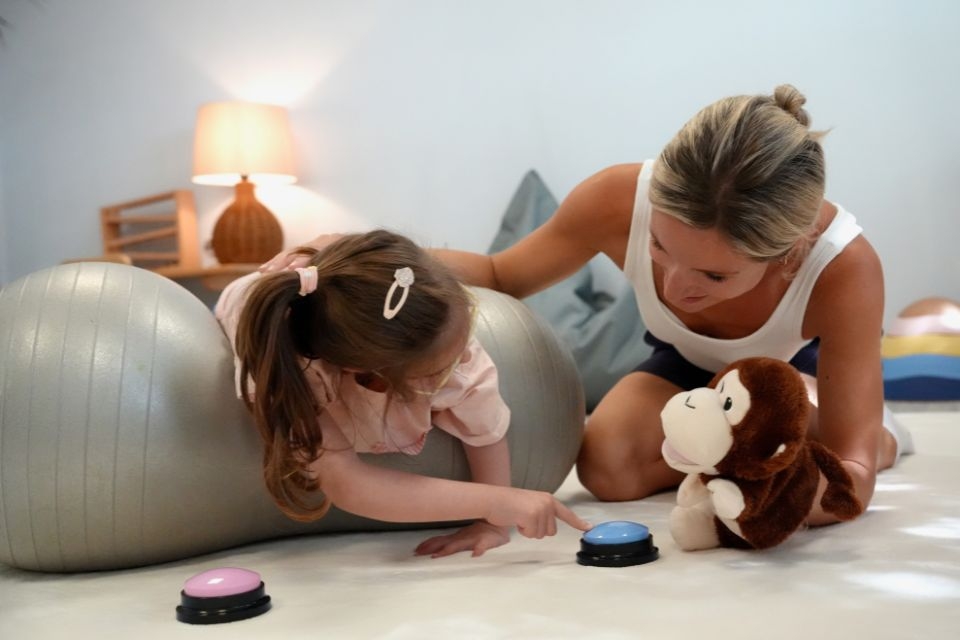
Occupational therapist Camila Chaplin spent many years working in the NHS, specialising in paediatrics and with a particular interest in upper limb rehabilitation, running a children’s hand clinic for seven years.
However, in 2021 she launched her own business to meet a growing need for her services. Her work with children (from birth to 18) ranges from Constraint Induced Movement Therapy (CIMT) - a rehabilitation technique designed to improve the use of a weaker limb, often for patients born with a stroke; and she also supports children with sensory processing, emotional regulation, sleep, independence skills and neurodevelopmental differences such as ADHD and autism.
Her specialist work in intensive upper limb rehabilitation for children with hemiplegia and cerebral palsy requires intensive therapy but is not currently available through the NHS, meaning families were having to travel at great expense.
"I would see patients travel as far as Manchester for a week’s intensive therapy for their child, with each single trip costing potentially thousands of pounds when you factor in treatment, travel, accommodation and time off work,” says Camila.
“It’s not affordable for many families, who therefore take the basic NHS provision and don’t benefit from the intensive, repetitive treatment that will show results. On top of that, early intervention is key, yet there’s an NHS waiting list that means you might not be seen for years. Work is often reactive rather than proactive as a result.”
In contrast, Camila offers competitive rates and customers travel from across the South West, including Plymouth and Exeter. That growth in business resulted in a need for larger premises; Camila moved South West Therapy from her home into spacious rooms in Newham, with an office plus a space big enough to house therapy equipment including toys, balance boards and gym balls, even hoops hanging from the ceiling.
“A lot of my patients are young children, o what we do has to be engaging and motivating,” she says. “We also collaborate with local businesses and outdoor activity centres to ensure that the experience is as fun, memorable and meaningful as possible.” She’s joined by colleagues who specialise in art therapy, physiotherapy and psychology.
An increasing awareness and understanding of neurodiversity means demand for support has grown enormously in Cornwall. Sadly, this has not been matched by funding or staffing in the public sector, with selection processes for CAMHS (Child and Adolescent Mental Health Services) and Education, Health and Care Plans (EHCPs) limited accordingly.
Camila currently works within a number of local schools, supporting children to develop the functional skills they need to access education successfully, working alongside their EHCPs as well as with children who don't have EHCPs. “EHCP selection can be very black and white, and I often find myself filling the gap in between,” says Camila. “What we can deliver is so diverse, and I take a very holistic approach, picking apart and pinpointing where things are coming from.”
Sensory processing differences – for example, over- or under-responsiveness to sound, touch, taste and visual cues - has become equally well-known. Its behavioural outcomes often resemble naughtiness, but reflect a genuine struggle with external stimuli, which Camila can assess and make recommendations.
“It’s a very interesting role, and you learn a lot about yourself and your own children in the process,” she says. “I have two little ones, and I never see them as being naughty – I'm more understanding of the world around them, and wonder what they are struggling with or finding overwhelming in their environment.”
Seeing how her work helps people has inspired Camila to set up a Community Interest Company (CIC) to secure funding that can provide fully or partially-funded therapy for children and families who may otherwise be unable to access support. Camila is currently gathering evidence of local need through a short questionnaire, which will help support future funding applications (https://forms.gle/RMV4eQFpoKrwey1b6).
She’s also working on a SENCo Network, which will operate as a membership model for schools, regardless of their size or budget, and provide more equal access to occupational therapy support, resources, training and professional guidance.
In contrast with her work with children, Camila’s adult patients are more often referred from insurance companies after accidents or acquired brain injuries. Their requirements include rehabilitation, community reintegration and home adaptations; the Newham premises are easily accessible, with good parking as well as disabled access and facilities.
“For me, it all comes back to the difference that timely, meaningful support can make,” she says. “Whether that’s helping a child gain confidence in using their hand, supporting a family who have spent years searching for answers or working alongside a school to better understand a pupil’s needs, it’s a privilege to be part of their journey.
“The demand for these services across Cornwall is significant and knowing that I can help children and families access support that may otherwise be out of reach makes all the hard work worthwhile.”
To find out more, email hello@southwest-therapy.com or visit www.southwest-therapy.com.